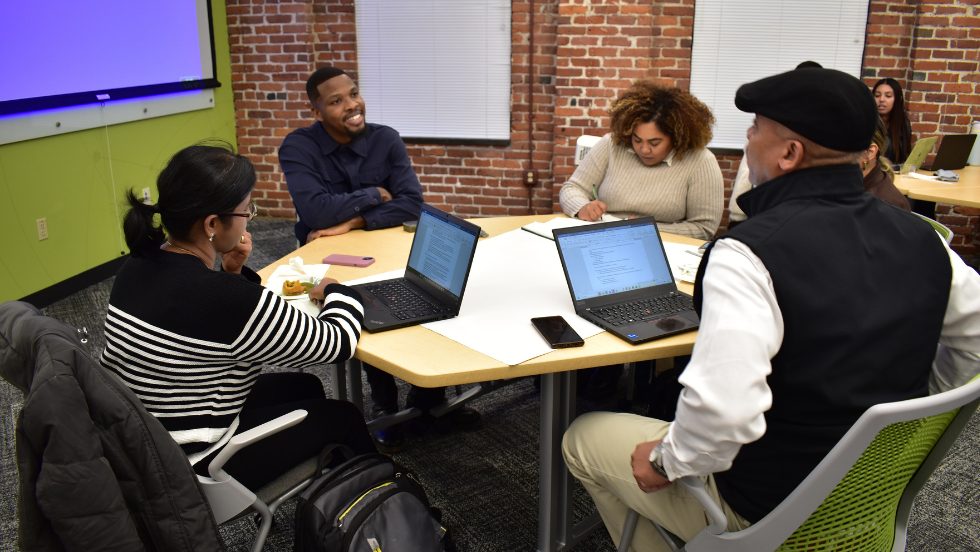
With a focus on turning theory into community-driven action, EDUC 1015: Reimagining Power: Community-Driven Evaluation and Education invited students to explore how culturally responsive approaches can measure the effectiveness of social programs.
The course, taught by Professor Jacques Lesure, built on the Brown Department of Education’s core commitment to community-engaged teaching, giving students the opportunity to learn both from and with local organizations dedicated to advancing equity in Providence.
A New Partnership with United Way of Rhode Island
This semester marked a new partnership between EDUC 1015 and United Way of Rhode Island (UWRI), focusing on contributing to the evaluation of the Providence Equity Fund. This $1.5 million initiative, launched in 2024, awarded grants to fifteen nonprofit organizations serving historically underserved communities across the city. This initiative focuses on closing the racial wealth gap, advancing cultural education, and promoting urban renewal in Providence.
The partnership was facilitated through the Community-Engaged Data and Evaluation Collaborative (CEDEC), an initiative of the Swearer Center for Public Service bringing together partners from across Brown. Dan Turner, CEDEC Associate Director shared, "CEDEC's mission is to match our partners' priorities across resources at Brown, such as Professor Lesure's class. As we were exploring additional avenues for partnership with UWRI, this opportunity promised applied learning for students at various stages of their educational journey while meaningfully contributing to our partner's broader evaluation goals."
The Providence Equity Fund utilizes an innovative trust-based philanthropy model. As Professor Lesure explains, “The nonprofits received unrestricted funds and could decide how to best use them. That’s rare, and it gave our students a unique opportunity to study how flexibility and trust can shape meaningful outcomes in the field.”
Through this partnership, students extended UWRI’s evaluative work by focusing on the collection and analysis of qualitative data to explore: the effects of unrestricted funds on organizational capacity, sustainability, and community well-being; challenges faced and strategies of resilience grantees are using in response to shifts in political and economic climates; and the unique ways organizations and community members approach monitoring, evaluation, and learning.
Learning Through a Culturally Responsive Lens
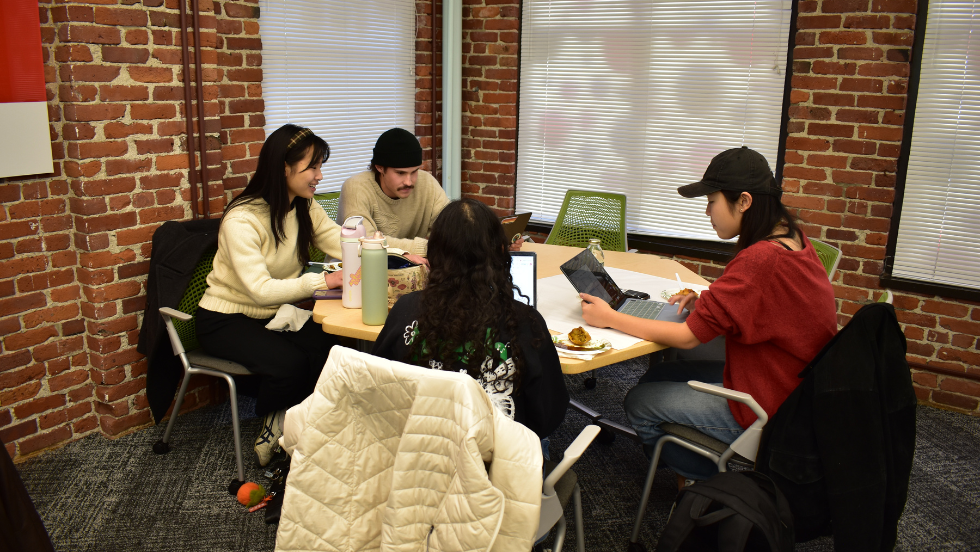
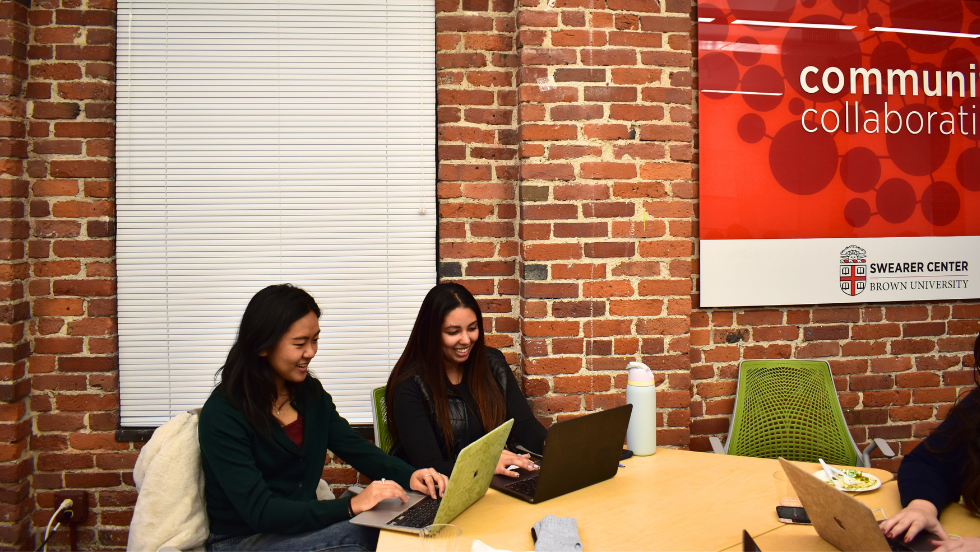
Students worked in pairs, each engaging two community partners. Their goal was not just to collect metrics, but to understand implementation and impact through a culturally responsive lens. This involved designing and leading interviews and focus groups with staff members and community participants.
“This course is about reimagining power and what it means to evaluate programs in partnership with communities,” said Professor Lesure. “Students learned about qualitative data collection skills while simultaneously engaging big questions of power, history, and repair in the context of Providence.”
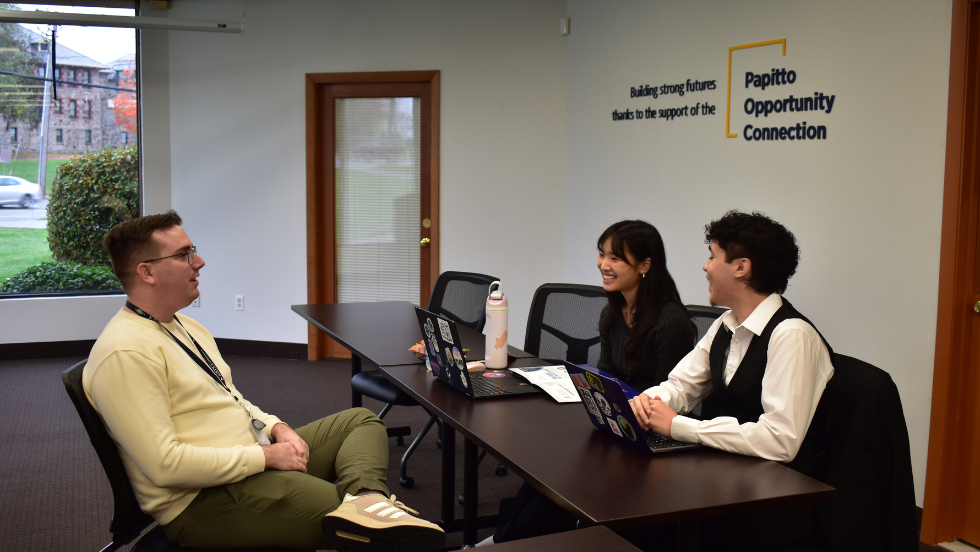
Supporting the process was Hamid Torabzadeh, the CBLR Fellow for EDUC 1015, who guided students through the practical realities of community-based work. “Unlike courses with clear-cut, theoretical readings, EDUC 1015 bridged culturally responsive evaluation theory with the practical, everyday needs of organizations, which were often changing rapidly,” Torabzadeh noted. “The beauty of evaluation is that no theory is perfect; working in lockstep with community partners is the key first step to delivering on these missions.”
Reflection and Reciprocity
A central theme throughout the semester was positionality. Students were continuously encouraged to reflect critically on their role as researchers from Brown engaging with community organizations. They addressed difficult questions, such as what it means to enter a space as an evaluator and how to build relationships rooted in respect, reciprocity, and care.
Professor Lesure emphasized the lasting professional value of this work: “This isn’t just about learning to interview or code data. It’s about being reflective, aware of yourself, and understanding your journey as someone who is co-producing knowledge. Those are essential skills that go far beyond traditional evaluation training.”
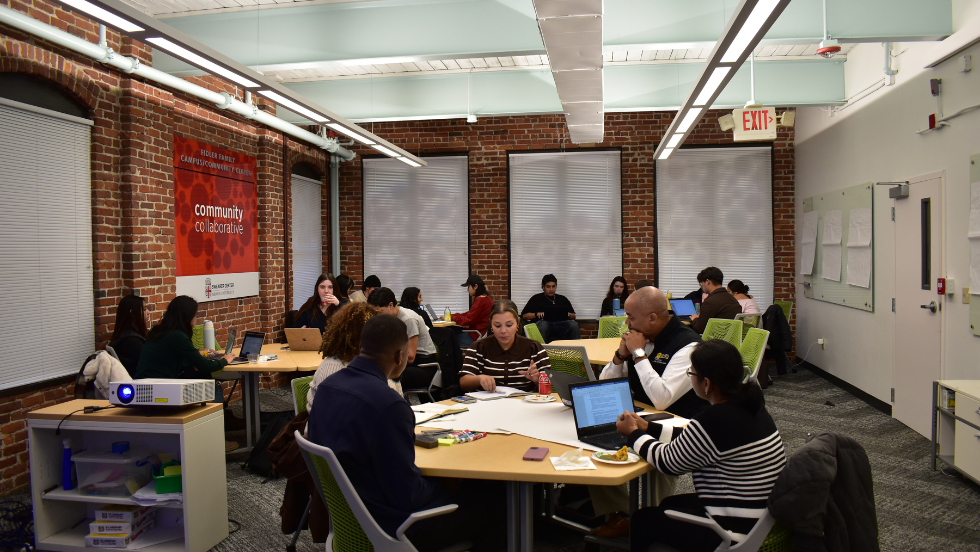
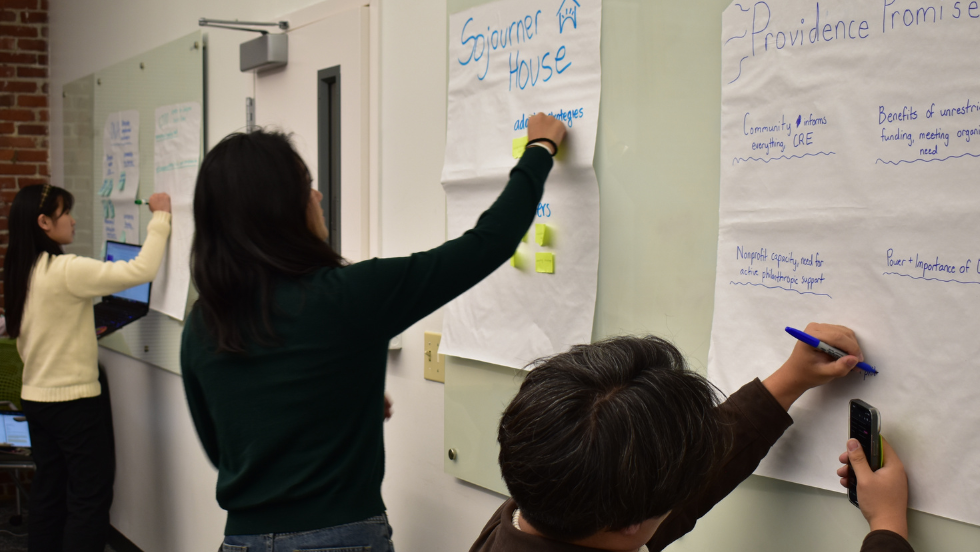
In addition to conducting focus groups with grantee organizations, EDUC 1015 students had the chance to join United Way of Rhode Island staff members to engage in a data interpretation workshop. This workshop included interactive components such as gallery walks to understand larger themes from data.
By the end of the semester, students compiled a final report summarizing focus group findings and sharing key insights for continued learning and improvement. Lessons from this journey will be shared during a public showcase on December 3rd. RSVP to attend.
“Partnering with Brown University and its students on the evaluation of the Providence Equity Fund has given United Way of Rhode Island fresh insight into how trust-based philanthropy shows up in real communities,” said Cortney Nicolato, UWRI’s president and CEO. “Students’ thoughtful engagement with grantee partners will help deepen our understanding of what’s working, where challenges remain, and how we can shape future funding strategy to better serve Rhode Islanders. Collaborations like this are essential to our mission and to our commitment to think creatively about how we can drive meaningful and lasting impact.”
“Ultimately,” Professor Lesure concluded, “Evaluation is both about data but even more so about relationships, ethics, and accountability. I want students to have gained a real understanding of why a culturally responsive lens is essential to all of it.”