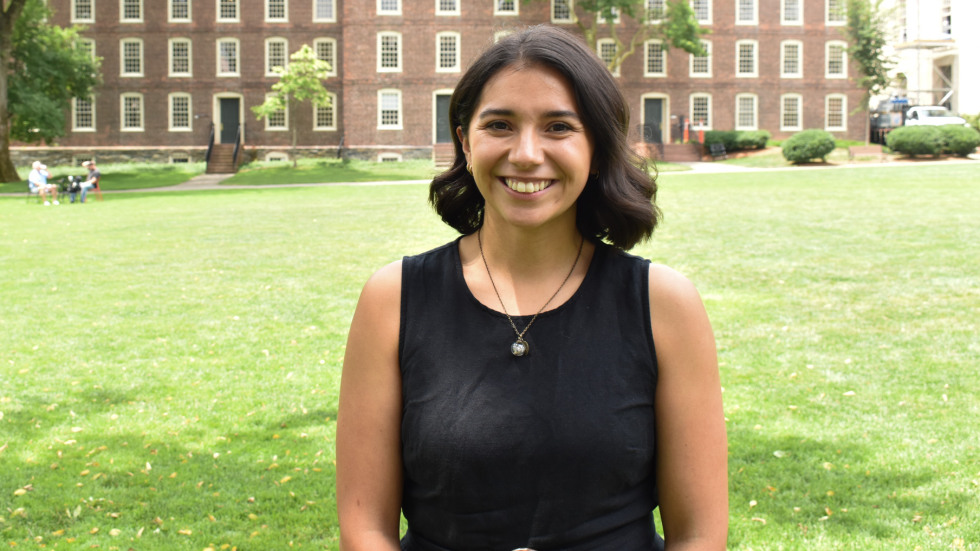
Name: Ash Horn
Hometown: La Pine, Oregon
Program: Urban Education Policy
Education: BS, Bioengineering
Where is your internship placement and what are you working on?
My internship this year is with Providence Promise. During the Fall semester, I focused on helping them analyze their existing programs and adjust some of their evaluation practices to better align with their needs. Currently, I'm most excited to be working on my capstone project. This project examines how Children’s Savings Account (CSA) programs, such as Providence Promise, define and communicate early signs of success, especially before children in the program reach high school graduation. In the first part of the project, I’m conducting a comparative analysis of CSA programs across the U.S. to better understand the funding pathways, political strategies, evaluation frameworks, and early- to mid-stage success indicators in programs with stable, recurring funding. I’m also interviewing several Providence Promise stakeholders to understand how they define early and mid-stage program success and to identify where these definitions align or diverge from patterns observed in CSA programs nationwide. The overall goal is to provide Providence Promise with insights to help inform their evaluation design, stakeholder communication strategy, and long-term sustainability planning.
What is something you enjoy about living in Providence?
There are so many things I enjoy about living in Providence. When my husband and I moved here, we were a bit nervous since we knew he had to find a job. I was pleasantly surprised by how supportive the local UEP alumni were in helping him find job opportunities. The same can be said about our neighborhood in Federal Hill. When the blizzard hit a few weeks ago, it was incredible to see our neighbors come together to clear sidewalks and dig out cars. Before joining the program, I had never visited New England, and I’m thrilled to say that we feel so welcomed here. In fact, we love it so much that we've already had his parents, my grandparents, and several friends come to visit just so they could experience it for themselves!
What excites you the most about your post-graduation plans?
I’m incredibly excited to put my new skills to work. We are graduating at a time of uncertainty, and while that can be intimidating, I also see it as an opportunity for my classmates and me to step up and be the change we want to see in the world. Through this program, I’ve sharpened my analytical skills and built a strong toolkit of quantitative methods that will make me a more effective researcher. At the same time, the program has helped me further develop my communication skills, which I believe are essential for translating research into real-world practice. I’m confident that, after completing the program, I’ll be able to use these skills to make meaningful contributions to education policy and work toward making education more equitable and joyful for all students.
Who has made you the person you are today?
My family has undoubtedly shaped who I am today. Growing up, my mom worked at a state-subsidized daycare facility, where she taught me the importance of compassion and strength, and how every student deserves to feel safe and welcome at school. My dad, the first in his family to immigrate to the U.S., taught me to be curious about the world and to always keep an open mind. And my grandparents, who have always been the backbone of our family, instilled in me the values of grit, strength, and community. They have always been there for me and have shown me the true meaning of sacrifice for those we love.
I am most passionate about…
I am most passionate about leaving the world better than I found it. When I was young, my dad used to take me hiking, and he always said we should leave the trail better than we found it. If we saw trash or obstacles, we’d take the time to clean them up. Maybe it’s a small and silly comparison to the world, but I think it holds true. We are not individually always responsible for what happens in the world, but by virtue of inhabiting it and sharing it with 7 billion other people, I think it’s our job to make it the best it can be for everyone. To me, that means showing up and being there for friends and neighbors in my personal life, and working towards making education more equitable, joyful, and useful for all students in my professional life.
What would you tell someone considering a master's at Brown?
First, congratulations if you are considering a master’s in the UEP or MAT programs! If you’ve found yourself looking here, you are certainly on a wonderful path. The UEP program offers numerous opportunities to learn, not just from the classroom, but also from your internship, cohort members, and the broader UEP alumni and faculty. My biggest piece of advice would be to remember that you get out of this program what you put in. The faculty are eager to engage with students, so don’t hesitate to reach out to them and attend office hours. These programs are short and intense, so be ready to dive in and hit the ground
running!
How has Brown prepared you for your career? What additional job skills have you
gained?
The UEP program has helped me feel prepared for a major change in my career. Prior to this program, I had worked for nearly 8 years at a research funding agency focused on patient-centered health research and the dissemination and implementation of findings. During that time, I also developed a real passion and commitment for education. The UEP program has helped prepare me in two major ways. First, it has helped me develop a range of new quantitative and qualitative data analysis skills. As someone who has always been more comfortable with quantitative data, this program has shown me the value and importance of qualitative data, and how it can be used alongside quantitative data to develop a more complete understanding. One of the faculty members, Andrea Flores, I think, put it very nicely. She described quantitative data as providing the frame, and qualitative data as providing the picture within the frame. The second important thing this program has done is help me translate the skills I gained in my previous work into the field of education. It’s helped me see the parallels between patient-centered and student-centered research, as well as the importance of disseminating research findings in ways that are accessible to students and their families.